
Norway is a dream destination for many travelers, myself included. This summer, I went on an extraordinary road trip around the country, finally experiencing so much of Norway’s beauty for myself. I traveled with my (Norwegian) friend Johan, who planned the whole trip and did all the driving – I’m so grateful! Thanks to having a vehicle, our itinerary skipped some cities and places that are easily accessible by public transport, and instead prioritized destinations and areas that would be challenging without a car. Here’s a look at our 6-day Norway road trip itinerary, focusing on the outdoors and scenery.

Table of Contents
Important Information on This Norway Road Trip Itinerary
This itinerary is from my road trip, which was limited to just six days. I EASILY could have spent 7-10 days doing this same route at a more leisurely pace. Due to work commitments, though, I needed to go pretty fast. Some of the days are very long driving days – I rarely plan more than 4-5 hours of driving myself when I’m also doing stuff like hikes or sightseeing. I personally wouldn’t have planned this route this way if I was driving, as it would be too much driving each day for me. Thankfully, I got to be passenger princess and my friend was happy to do these long drives! Don’t risk driving tired, it’s so dangerous. You can break up the route with different overnight stops to even out some of the driving.

This trip also took place at the beginning of July, when there are very long daylight hours in Norway. You have a lot of time in the day to explore if you get up early and stay out late! It was light out from about 5am to at least 11pm each day. This itinerary would not be possible at other times of year because you’d be driving in the dark. Despite the hectic pace, I really loved it and I’m so glad I crammed in as much of Norway as I did.

Driving in Norway: Tolls and Ferries
Norway is a spectacular country, but there are some important things to keep in mind when traveling here and road tripping. Norway’s public road system is connected by ferries across various bodies of water. You don’t usually book these, you just show up and wait to drive onto the next one. This may mean that you miss the ferry, and need to wait for it to come back before crossing. I loved this experience – it was like doing loads of mini cruises, but without the tourist prices! The shortest ferry I took was under 10 minutes, the longest was about 30 minutes. I found the road and ferry system here to be excellent.

There are also numerous tolls on roads in Norway. This can really add onto your budget, and (unlike many péages in France) there isn’t always a slow/alternate route to avoid them. I went through a lot of tolls on this itinerary. You don’t pay anything when you use the ferries or tolls, your vehicle’s license plate will be read automatically and the fee billed to your account. Norwegians have an AutoPASS account. As I understand, it’s not possible to have an account for this unless you have a Norwegian bank account.
If you’re driving your own foreign vehicle in Norway, you may want to look into an Epass24 account. Rental car companies register their vehicles with AutoPASS, and you will pay for any tolls/ferries in your final bill. Check the fine print though – some rental companies may charge an administrative fee per day or per toll, and this can be a nasty surprise at the end!
Remember that some roads are not always open. The road to Geiranger is usually only open from May to October or early November. Roads may close in winter, or in extreme weather. I did this road trip in July, when all roads were open. But if you’re traveling at other times of year, you might not be able to travel this route! Find road and traffic information in Norway here.

Planning Your Road Trip in Norway
You’ll probably be starting your adventure in Norway in the capital city, Oslo. Oslo Airport (OSL) is the major airport in the country – I use Skyscanner to find the best flight deals. Torp Sandefjord Airport (TRF) is a small airport used by budget airlines like Ryanair and it’s almost 2 hours from Oslo. While the airport is connected to the city by trains and buses, the money you save on cheaper flights will likely be spent traveling to Oslo. Considering travel insurance for your trip? World Nomads offers coverage for more than 150 adventure activities as well as emergency medical, lost luggage, trip cancellation and more. Looking for tours around Oslo? Check out the options below!

Day 1: Oslo to Rondane National Park
Driving Time: 4 to 4.5 hours
Distance: 300-350 km
Overnight Stay: Rondane National Park
- Budget: Bjørgebu Camping AS – cozy logwood cabins in Mysusæter with shared bathrooms
- Mid-range: Rondane River Lodge – rooms, chalets, and cottages in a beautiful area
- Luxury: Eagle Nest Eco Lodge – modern, luxe rooms with superb mountain views
The first day of the road trip was via Lillehammer and Otta to Rondane National Park. We stayed at Johan’s family’s cabin, and I don’t know where exactly I was, haha. But it was stunning, and such a cool (and very Norwegian) experience for me!

Maihaugen (Lillehammer)
Maihaugen is an open-air museum in Lillehammer, and one of the best places to visit in Norway to learn about Norwegian history and culture. There are over 200 buildings to see here – you can step inside a stave church, a traditional cabin, or even Queen Sonja’s childhood home! In the exhibition center, you can see a variety of historic Norwegian artifacts and objects. The grounds are expansive, and you’ll want a minimum of 1.5 to 2 hours here.
Lillehammer
If you have extra time, you can explore Lillehammer. The city hosted the Winter Olympics in 1994, and you can walk or take a chairlift up Lygårdsbakkene Ski Jump or see the Norwegian Olympic Museum. The Olympic Bobsled Track is located slightly away from the city. There’s also an art museum, plenty of shops, and a pretty bridge across the water.
Otta
Otta is a small town at the confluence of two rivers, one of which is glacial water from the mountains. You can see the difference in the water color on a walk along the river! This is a good stop for food, fuel, and supplies before going to the national park.


Rondane National Park
You could easily spend a full day, weekend, or week exploring Rondane National Park! This was my first real taste of classic Norwegian mountain scenery, and I couldn’t believe my eyes at times. There are wild reindeer and moose here, waterfalls, lakes, mountain peaks, and lots of hiking options. In winter, it’s a prime spot for skiing and winter sports. I definitely wish I’d had more time here, but I’ll just have to go back someday!

Day 2: Rondane National Park to Åndalsnes
Driving Time: 5 to 5.5 hours
Distance: 260 km
Overnight Stay: Åndalsnes
- Budget: Åndalsnes Camping og Motell AS – relaxed campground with budget rooms just outside the city
- Mid-range: Grand Hotel – comfortable hotel with great views and a convenient location
- Luxury: Villa Haudalan Åndalsnes – three-bed villa with a balcony and fireplace
This is a long driving day, so get an early start. And while there is a lot of driving, most of the stops are short walks to viewpoints! The drive itself is the main attraction, as you drive the road to Geirangerfjord – one of the most spectacular drives in the world.

Lom
Lom is a pretty little town, surrounded by mountains and close to Jotunheimen, Breheimen and Reinheimen National Parks. There are a few scenic spots by the river – like this waterfall viewpoint – but the real showstopper here is Lom Stave Church. This stave church dates back to 1158, and is one of the biggest and oldest stave churches in Norway! Guided tours are available during the summer, or you can admire the building from the outside.


Billingen
This was an unplanned stop, but such a good one! See the river rushing from the bridge, or head out on a short uphill walk to see the waterfall and a wooden bridge. There are other hiking options here, but with such a heavy driving day, it’s best to keep an eye on the time. Finish it off with Norwegian waffles from the cafe/guesthouse.
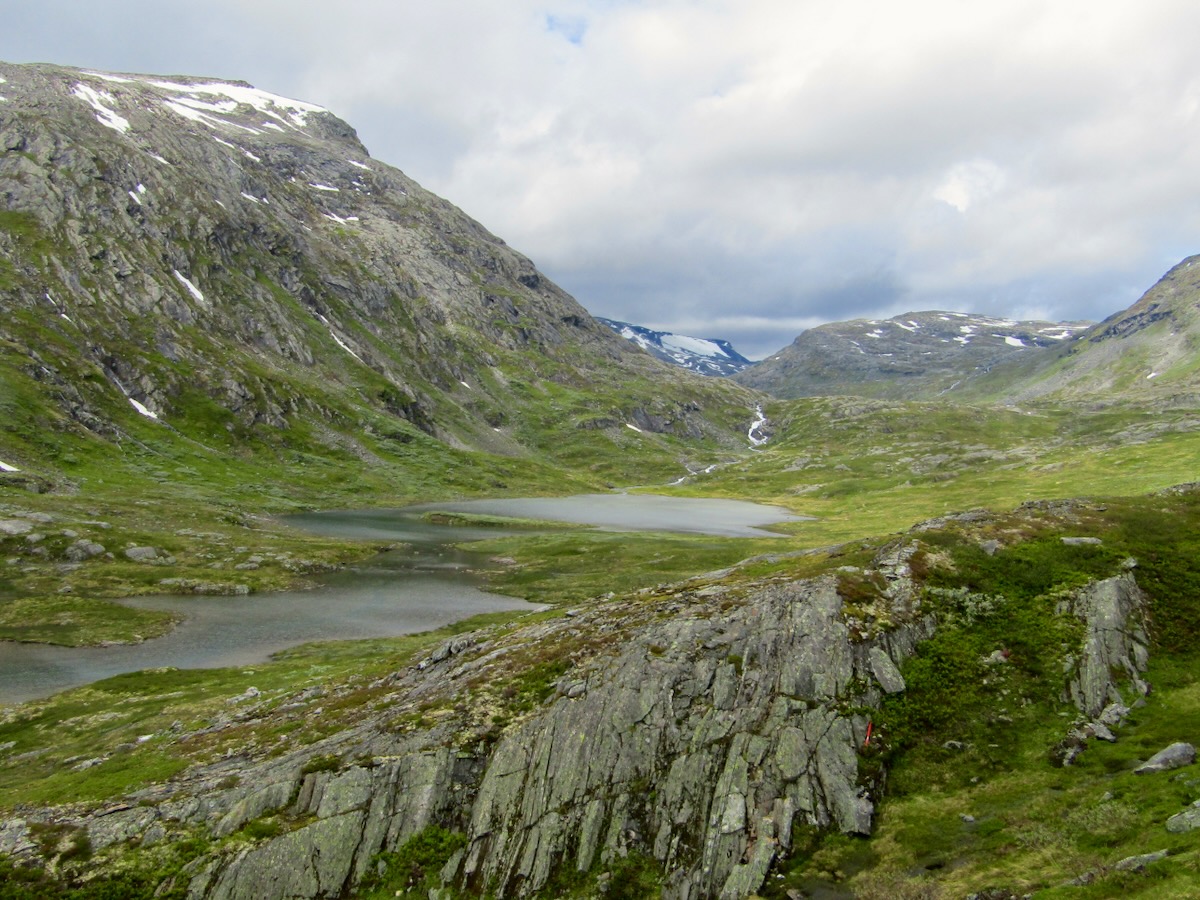

The road to Geiranger
This is one of the most scenic drives in Norway. Travel through mountains, alongside lakes and waterfalls, to a jaw-dropping viewpoint of Geirangerfjord – a UNESCO World Heritage Site. I saved quite a few of the viewpoints in Google Maps, and have linked them below:
- Rasteplass ved Breidalsvatnet – large layby near lakes
- Grotli – parking area with pretty view of a lake
- Viewpoint – there is room for just 2-3 cars here, but it’s beautiful! (First photo used above)
- Breiddalen utsiktspunkt – one of my favorite viewpoints before getting to the valley! (Second photo used above)
- Scenic View – superb view at the top of the road looking down to the valley and fjord

Flydalsjuvet
This is the classic view over Geirangerfjord. It’s a busy stop, but for good reason. Parking is a bit limited here considering how busy it is, although there is another small parking area just further down the road (closer to the Google Maps pinned location). It’s a superb view.


Ørnesvingen Viewpoint
After driving down to the village of Geiranger, drive the switchbacks up the mountain road to Ørnesvingen viewpoint. This is another very popular lookout, and traffic/parking here can be a bit stressful due to large coaches that dump big groups all in one go. But the views over Geirangerfjord are phenomenal.

Gudsbrandsjuvet
Stop for a short walk at Gudsbrandsjuvet, a gorge with a 20- to 25-meter ravine. You can see the kettle holes and rock formations shaped by the rushing water. There’s a metal walkway above the river, and there’s also a café.

Trollstigen
Trollstigen is a magnificent mountain pass – a road cut into the side of the mountain, with 11 hairpin bends and an impressive waterfall on the side of the road. Head out along the walkway to the furthest viewpoint for the best shot of the entire road, twisting down into the valley below. There is a very large car park here, along with a visitor center, café, and shop. This is one of the most scenic roads in Norway. I was glad I didn’t have to drive this section, though!

Åndalsnes
After a busy day, we didn’t have much time to explore Åndalsnes – which was probably just as well, considering the weather was rainy and cloudy. But if you have better weather than me, hike up to Rampestreken, which has gorgeous views over Romdalsfjord and surrounding mountains. You can also take the Romsdalen Gondola up to Nesakla, and walk about 15 minutes down to the viewpoint. The walk to Rampestreken via the steps is short but steep – AllTrails advises it’ll take about 2.5 to 3 hours in total. Exercise caution in wet weather, as the trail has slippery sections.

Day 3: Åndalsnes to Runde
Driving Time: 6 hours
Distance: 270 km
Overnight Stay: Runde/Fosnavåg
- Budget: Goksøyr Camping – the most convenient place to stay on Runde for the cliffs
- Mid-range: Thon Hotel Fosnavåg – modern, sleek hotel on the harbor in Fosnavåg
- Luxury: Runde Panorama – Trollvogga – two-bedroom apartment with breathtaking views
This is another very long driving day, with lots to see, so start early! You’ll want to be arriving to Runde in the evening, around 8:00-9:00pm. But there’s a good amount to see and do, especially if you’re going into Ålesund, so aim to set off promptly.

Molde
Make a quick stop at this coastal city on Romsdalsfjord. There’s the Romsdal Museum and Varden (the Molden Panorama), with views of 222 mountain peaks. The city is also known for jazz, and hosts an annual jazz festival! I wish I’d had a bit more time (and better weather) here.

Trollkirka
Trollkirka was one of my top hikes of my Norway trip. Hike up through the forest to see a waterfall in a cave! The waterfall drops 14 meters down into the cave before disappearing underground. There is the main entrance to the cave, and a steel ladder around the top that gives you a different view. The hike is 4 miles total, with about 580 meters of elevation gain – it took me about 3 hours in total, including time in and around the cave taking photos. Be sure to bring a headlamp or flashlight for the cave. Find the route on AllTrails. There is a large car park with toilets at the trailhead.

Ålesund
With such a busy day with lots of driving and hikes, you likely won’t have that much time to spend in Ålesund. This is somewhere I definitely want to return! The best thing to do here is enjoy the view from Fjellstua Viewpoint – you can walk up the 418 steps from town, or if you have a car (and are feeling lazy, like me) you can drive to the top. Wander around the harbor and see the pretty Art Nouveau architecture, visit some of the city’s museums, or take a cruise/boat trip. If you’re not visiting in puffin season, you’ll have most of the rest of today to explore the city.

Runde
For wildlife lovers, the main highlight of today’s itinerary is the island of Runde. The drive to reach the island is beautiful – but the real showstopper here are the 100,000-some puffins that nest on the island’s cliffs! There is a large free car park (with paid toilets) where you start the hike to the cliffs. The hike is just under 3 miles, with 220 meters of elevation gain. It’ll take about 45 minutes to 1 hour to get up and reach the cliffs, and 35-45 minutes to go down.

Seeing so many puffins on the cliffs here was a bucket-list moment for me. I lucked out with perfect weather! The scenery was magnificent and the puffins were adorable. Aim to get up to the cliffs around 8:00-9:00pm in the evening. Read my guide to seeing puffins on Runde here. There are a few accommodation options on Runde, otherwise I stayed at an Airbnb in Fosnavåg which was great.

Day 4: Runde to Skei
Driving Time: 5 hours
Distance: 250 km
Overnight Stay: Skei
- Mid-range: Grand Hotel Skei – classic rooms in a historic hotel with a pool (access is charged)
- Luxury: Kjøsnes Feriehytter – cozy wooden houses with lake/beach access
Depending on where you stayed the night previously, you’ll have 4.5 to 5 hours of driving on this day. The first part of the day is driving to Stryn without stops. The scenery that awaits is well worth it!

Stryn
Stryn is a small town surrounded by mountains, glaciers, and blue-green lakes and fjords. It’s an impressively scenic spot, although the town center can be busy. I liked seeing the winding Stryn River, which is blissfully quiet if you drive just a few minutes out of town.

Rakssetra
Rakssetra was probably my favorite hike that I did in Norway! The trail is extremely steep up through the woods – I highly recommend hiking poles, especially for the descent. It was raining and the trail was slippery, and a few people we passed were really struggling going down. But the reward at the top is phenomenal. There are a number of grass-roofed cabins on the hillside, with superb views down to the fjord and across to the imposing mountains. The hike is 1.9 miles with 285 meters of elevation gain, and took me 1.5 hours – with lots of time taking photos! There are two car parks at the trailhead, both cost 100kr. If you only do one hike around Stryn, it should be this one!

Lovatnet
This stunning, bright-blue lake past Loen was one of my top stops on this Norway road trip. The water is insanely blue, and the lake is surrounded by mountains and waterfalls. Stop at Breng seter to see some cute lakeside cabins, admire the thundering Aseshafossen, and stop by the campground to take the best photos of the lake and mountain scenery. There’s a small parking area here.

Skjørbakkane Viewpoint
After driving up a number of switchbacks into the mountains, stop at this gorgeous viewpoint. The scenery is amazing, and you can see out over the fjord and mountains.

Stardalselva Valley
This scenic valley on the way to Skei made me feel like I was living in Lord of the Rings! Waterfalls streamed down the valley walls as we drove alongside rivers. You’ll drive it going to Skei, but you can also use this GoogleMaps pin.

Skei
Skei is a small lakeside village with pretty scenery, and a supermarket and gas stations that make it a natural stopping point to stock up on supplies. Try Fyrig Sauna Skei or go for a hike to Hamnanova for great views. You can also detour down the lake to Vassenden and the viewpoint, or to take the very short walk to Huldefossen to see the waterfall (park here for Huldefossen).

Day 5: Skei to Fagernes (Valdres)
Driving Time: 5 hours
Distance: 290 km
Overnight Stay: Fagernes
- Budget: Fagernes Camping – campground with cottages and apartments, right on the lake
- Mid–range: Scandic Valdres – lakeside hotel with a convenient location and pretty terrace
- Luxury: Fela Mirror Cabin – stunning two-bedroom property with incredible views and plush décor
For the penultimate day of the road trip, this is a slightly shorter drive than other days. This is mainly because there are no set hikes for this day, so a lot of the stops are just short ones to snap a few photos.
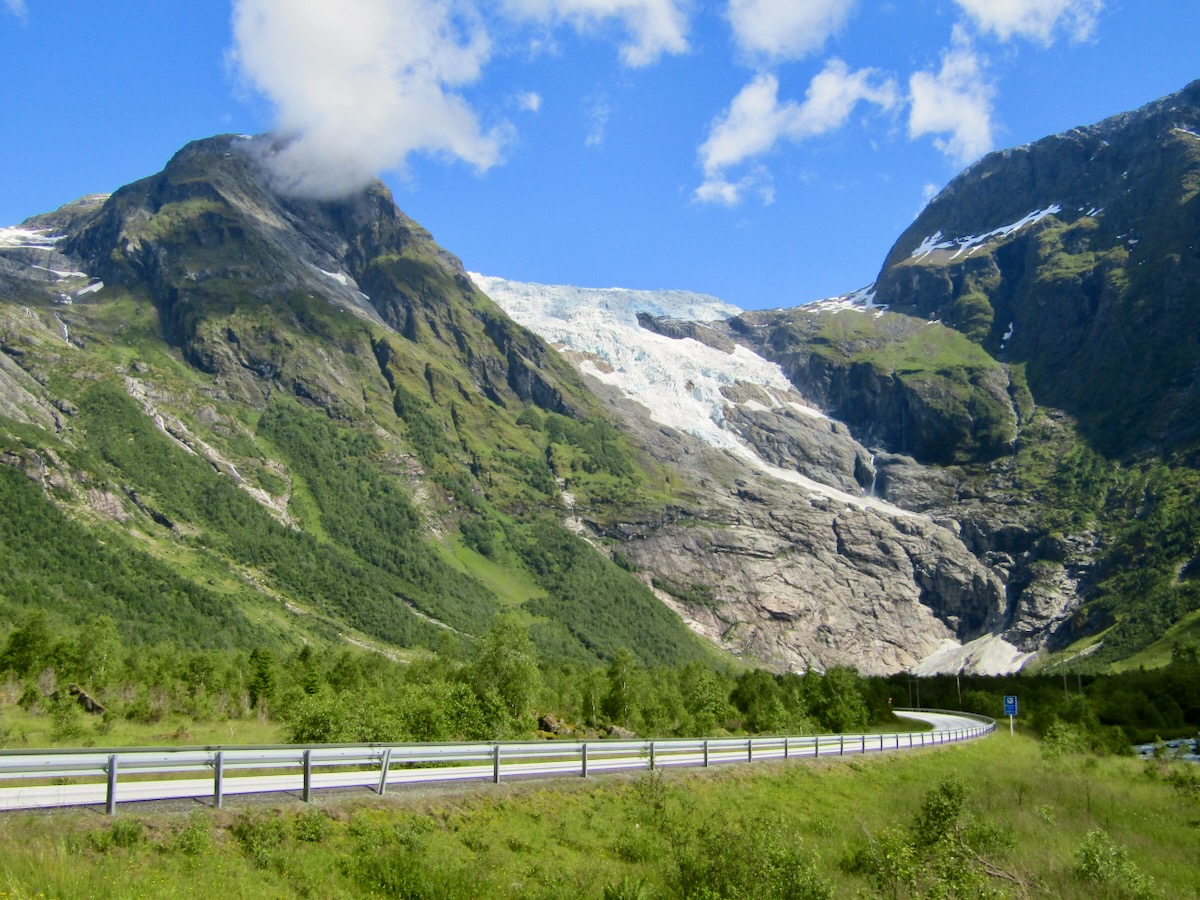
Bøyabreen Glacier
Only in Norway can you drive in a tunnel beneath mountains and emerge with a view of a glacier on the other side! This is a spectacular stop to see Bøyabreen Glacier. There is a short hike from the car park to the lake, where there’s a great view of the glacier above the water. Be aware that the parking is immediately after the tunnel, so be prepared to turn off quickly.
Glacier Museum
The Glacier Museum in Fjaerland is a modern, hands-on museum where you can learn about glaciers and the climate. It’s located in a beautiful setting, in a valley surrounded by mountains at the end of an arm of Fjaelandsfjord. It’s a solid option on a rainy or bad weather day.
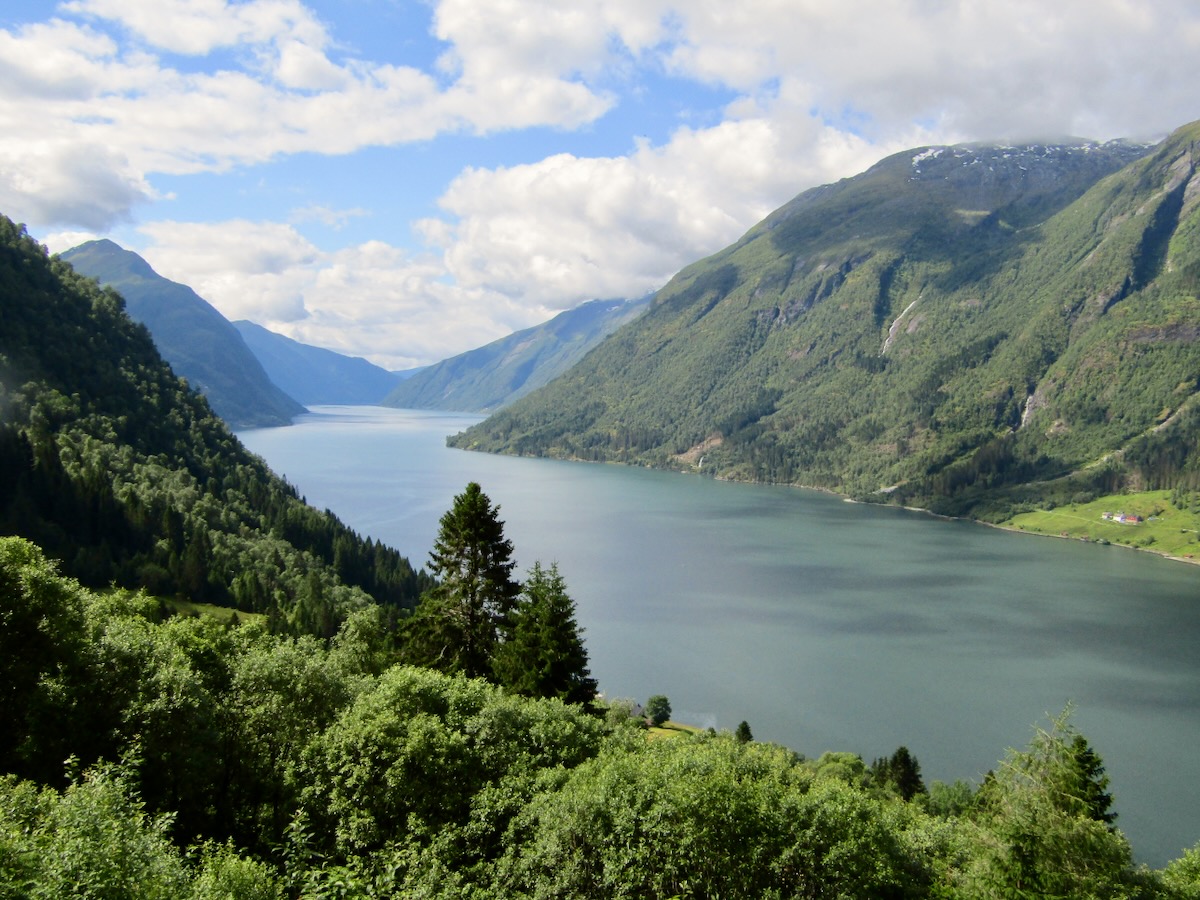
Fjaerlands Fjord Viewpoint
This viewpoint of Fjaerlandsfjord was one of my top scenic views all day. It’s right at the bend of the road, so you get magnificent views down both arms of the fjord. Don’t miss it!

Sogndalsfjøra
You’ll drive through Sogndalsfjøra on this day, which is a large fjord village. This is a good spot for stocking up on supplies. There’s a viewpoint above the town you can walk up to, but be aware there’s no parking here so it’s not very practical.

Solvorn
Solvorn is an impossibly cute and charming Norwegian village on Lusterfjord. This was one of my favorite stops this day – it’s a pretty and quiet place, perfect for a wander around the old buildings and a swim at the beach. Norway’s oldest hotel, the Walaker Hotel, is here!

One thing I wish I had done was take the ferry across the water to Ornes, to see Urnes Stave Church. This is one of the oldest stave churches in Norway, with a stunning setting above the fjord! The ferry between Solvorn and Ornes only goes every hour in summer, and we’d just missed one when we arrived – and it would have taken up too much time to wait for the next one, visit the church, and wait to return on the next ferry. Check ferry times in advance here.

Eide Badeplass
After returning to the main route from Solvorn, it’s possible to make a short stop at Eide Badeplass for a swim in a fjord. It’s a narrow, winding road down to the water, where there’s a car park and toilets. I loved swimming here! The beach is partly sandy, which was nice, and the water was so refreshing. It’s a great spot for a dip during a busy road trip.

Sjurhaugfossen
This waterfall is a quick roadside stop. The river narrows to rush through a gorge, with great views. The parking is immediately after you exit the tunnel, so be prepared to stop right away.

Borgund Stave Church
Borgund Stave Church is one of the most-visited stave churches in Norway. It was built around 1180, and is very well-preserved – look out for the intricate carvings of dragons on the roof. There is a visitor center and large car park here, along with a modern church next to the stave church.

Øye Stave Church
If you’re not stave-churched out (lol), detour off the main highway and stop at Øye Stave Church. This church is in a tiny village, but it makes a phenomenal view – the historic church, with features from the 1100s, and the dramatic mountain peaks in the background. The church is rarely open to the public, so plan on just admiring it from outside.

Fagernes (Valdres)
The final stop of the day is the town of Fagernes in Valdres, a mountainous region that’s perfect for outdoor lovers. The town has a number of places to stay and eat, plus a pretty lakeside location.

Day 6: Fagernes to Oslo Airport
Driving Time: 2.5 hours
Distance: 180 km
This is the last day of the Norway trip, and I flew out of Oslo Airport at the end of this day. How much you can do really depends on your flights or onward travel plans.
Kviteberg
Hopefully, you have some time on this day for one last hike in Norway. And if you’ve got time for a short hike around Fagernes, it should be Kviteberg. This hike will take about 1 to 1.5 hours – it’s just over 2 miles, heading up through the woods to a beautiful viewpoint over the lake and town down below. Find out more route information on AllTrails.

Verkevika Brygge (Jevnaker)
For one last viewpoint (or swim) before reaching the airport, stop at Verkevika Brygge in Jevnaker. There are pretty views out across the lake, and a beach for easy access. It’s about 45 minutes to 1 hour from here to reach the airport – before you know it, you’ll reach the airport and the adventure will come to an end!

I had an incredible experience road tripping around Norway. It was definitely one of the most beautiful countries I’ve ever been to, with superb scenery everywhere you look and so much to offer for nature lovers. Sadly, I had to squeeze a lot into just six days. But I’d love to return and spend longer exploring each area – or go to some of the other popular cities like Bergen and Stavanger. Visiting Lofoten is another dream! I hope this post helps you plan your road trip in Norway.

And of course, a huge thank you to Johan for making the Norway trip of my dreams become reality!
Have you been to Norway before? What were your favorite places?
You might also like my posts:
How to See Puffins on the Island of Runde, Norway
11 Things to See and Do in Moss, Norway
My Top Solo Road Trip Safety Tips
Like this post? Pin it for later!


